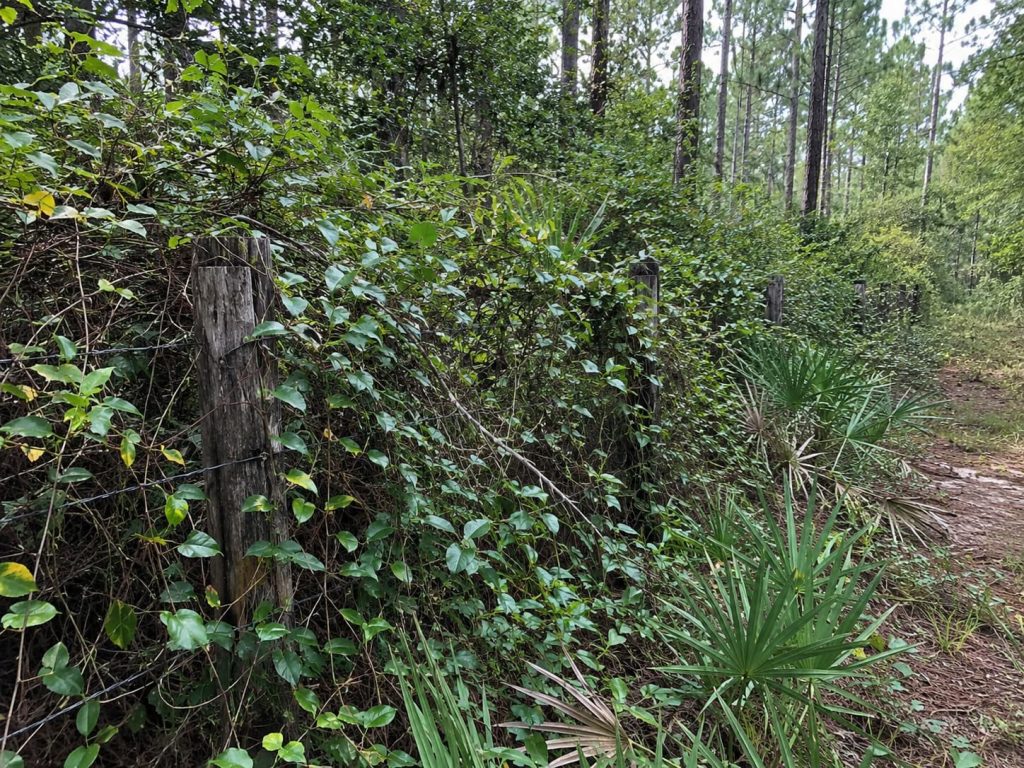
A fence line doesn’t vanish overnight. It’s a few vines one summer, a wall of privet the next, and then one day you walk the back of the property and can’t find the wire at all. By then the brush is doing real damage. Limbs lean on the posts, smilax drags the top strand down, and the survey corner you paid good money for is buried somewhere under all of it.
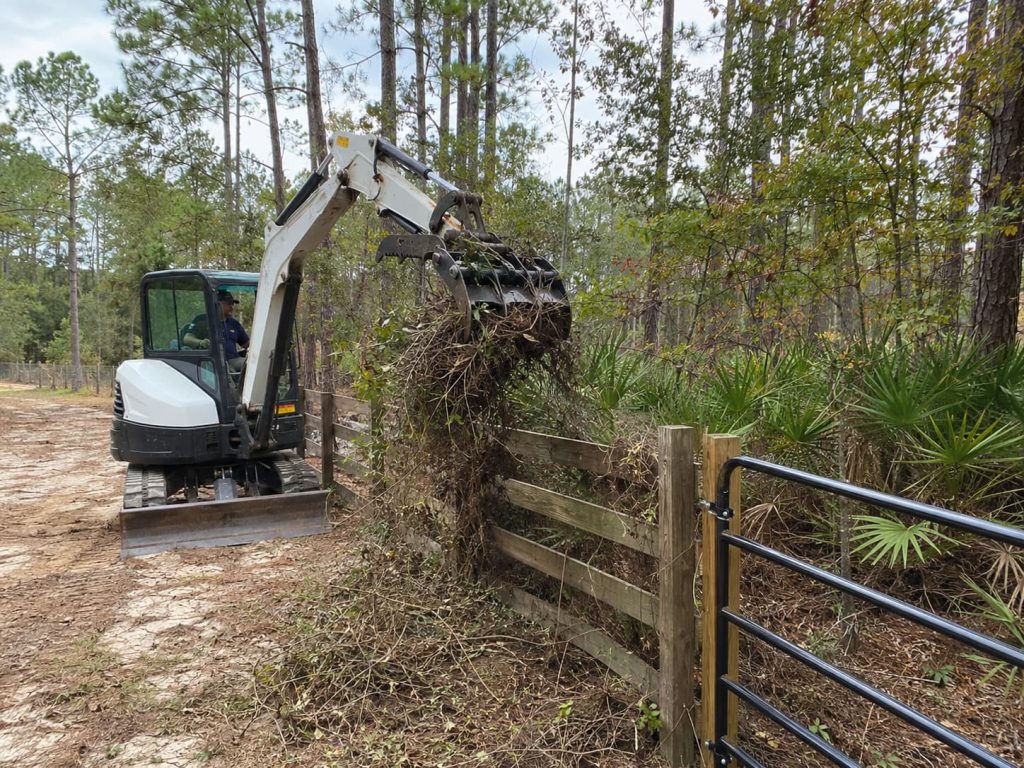
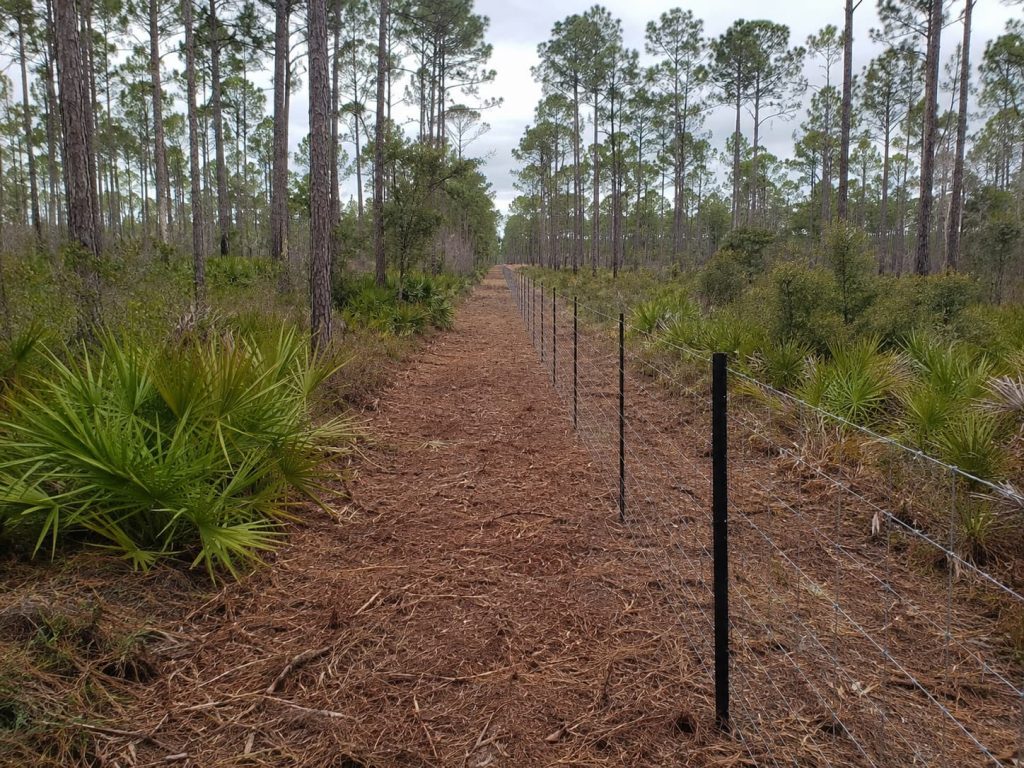
We clear that strip and nothing but that strip. A tracked mulcher runs the line, grinds the brush, vines, and small trees into cover right where they stand, and hands you back a clean, open boundary you can see end to end. No burn pile. No dump truck. No torn-up ground on either side of the wire.
That’s fence line clearing, and around Tallahassee it’s the quickest way to take a boundary back.
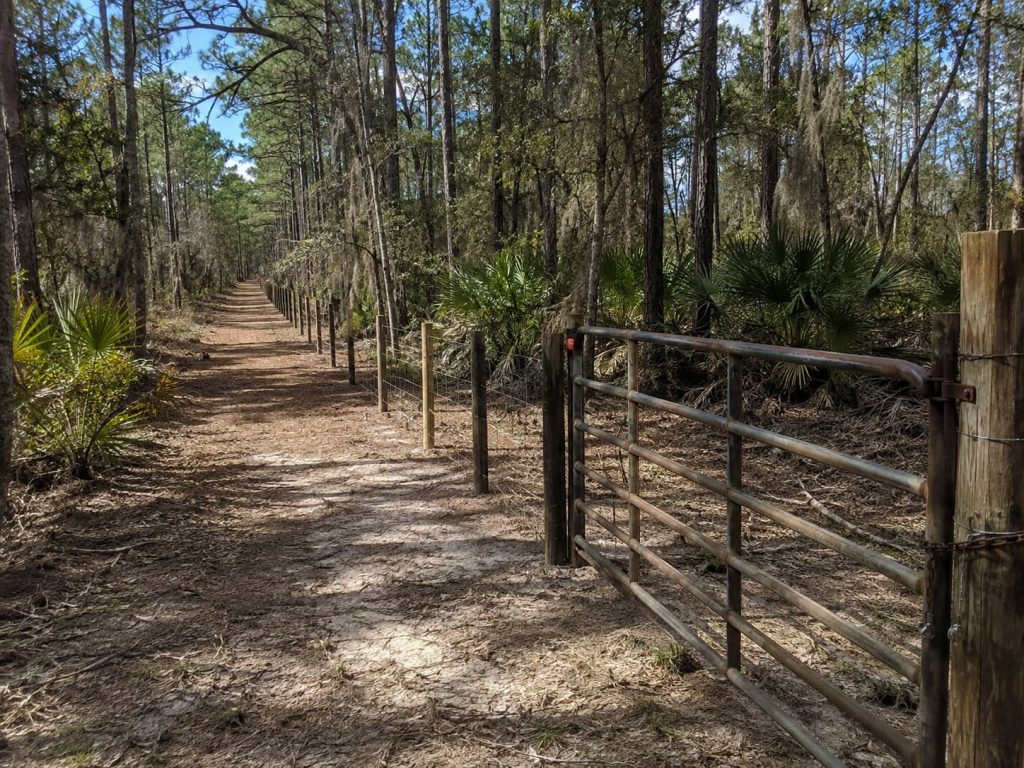
A fence line doesn’t vanish overnight. It’s a few vines one summer, a wall of privet the next, and then one day you walk the back of the property and can’t find the wire at all. By then the brush is doing real damage. Limbs lean on the posts, smilax drags the top strand down, and the survey corner you paid good money for is buried somewhere under all of it.
We clear that strip and nothing but that strip. A tracked mulcher runs the line, grinds the brush, vines, and small trees into cover right where they stand, and hands you back a clean, open boundary you can see end to end. No burn pile. No dump truck. No torn-up ground on either side of the wire.
That’s fence line clearing, and around Tallahassee it’s the quickest way to take a boundary back.
Most folks try to handle an overgrown line the hard way first. A machete and a Saturday gets you about forty feet before you quit. A bulldozer or a grapple takes the brush, sure, but it also yanks out posts, snaps wire, and leaves ruts in ten feet of good pasture on either side. Now you’ve swapped a brush problem for a repair bill.
Mulching plays differently. The cutting head sits on a skid steer that turns tight and reaches right up to the wire, so the brush comes off while the fence stays standing. Here’s what that buys you:
If the back of your land has gone to jungle, or the neighbor’s tree line is leaning onto your side, this is how you fix it without starting a fence war.
Most folks try to handle an overgrown line the hard way first. A machete and a Saturday gets you about forty feet before you quit. A bulldozer or a grapple takes the brush, sure, but it also yanks out posts, snaps wire, and leaves ruts in ten feet of good pasture on either side. Now you’ve swapped a brush problem for a repair bill.
Mulching plays differently. The cutting head sits on a skid steer that turns tight and reaches right up to the wire, so the brush comes off while the fence stays standing. Here’s what that buys you:
If the back of your land has gone to jungle, or the neighbor’s tree line is leaning onto your side, this is how you fix it without starting a fence war.
One number, the whole strip, nothing tacked on after the machine fires up. Every fence line job comes with:
You don’t release the balance until you’ve walked the finished line and signed off.
One number, the whole strip, nothing tacked on after the machine fires up. Every fence line job comes with:
You don’t release the balance until you’ve walked the finished line and signed off.
A fence line is a fence line whether it’s eighty feet behind a subdivision house or two miles around a cattle lease. These are the calls we get most:
Don’t see your situation? Call anyway. We’ve reopened lines the owner had written off for good.
Step
1
WE WALK YOUR LINE.
Greg meets you on site, walks the whole boundary, flags the trees you want left standing, and finds your corner pins and survey markers. Plan on 30 to 60 minutes.
YOU GET IT IN WRITING.
Inside 48 hours you’ve got a written quote priced by the foot, with scope, timeline, and start date spelled out. Say the word and we lock the date and pull any permit the job calls for.
Step
2
Step
3
WE RUN THE LINE.
The crew rolls in with the mulcher and a support truck and works the boundary end to end. Most home lines wrap in a day. Long pasture runs take one to a few, depending on length and how thick it’s grown.
WE WALK IT AGAIN, TOGETHER.
We head back down the finished line with you, knock out any spot you want touched up, and hand over before-and-after photos. The balance comes due only after you’ve signed off.
Step
4
Free on-site walkthrough. Written quote within 48 hours. No deposit, no obligation.
Most lines in the Tallahassee area run $1 to $3 per linear foot, and short runs get quoted as a flat job. Three things move the number:
We won’t price a line off a phone call or a satellite photo. Every boundary has corners, keep-trees, and existing fence the map can’t show, and guessing gets you a number that changes later. A quick walkthrough gets you a real quote that holds. Book it.
Anybody can rent a machine. Whether your fence survives the day comes down to who’s running it.
We clear fence lines across six Big Bend counties: Leon, Gadsden, Wakulla, Jefferson, Liberty, and Madison. You’ll catch our machine on lines in Tallahassee, Bradfordville, Killearn Estates, Crawfordville, Quincy, Monticello, Greenville, and Bristol.
Farther out, we build the drive time into the quote, so the figure you’re looking at is the figure you pay.
A dozer takes the brush, your posts, and a strip of good dirt with it. Mulching grinds the growth into ground cover right up to the wire. No piles, no hauling, no damage to the fence you're keeping.
However wide you need. Two to three feet keeps a line easy to maintain. Eight to ten opens room for a new fence and the equipment to build it. We settle the width when we walk it.
Yes. The tracked head works tight to wire and posts without pulling them out, so the old fence keeps standing while the brush around it disappears.
Not always. If your corners are fuzzy or the line is shared, we'll point out what we find and tell you to get a survey before we cut anything near a boundary in question.
We clear up to your line on your side. If you both want the whole thing done, it just takes the two of you agreeing first, and we're glad to walk through it with you.
A mulched line stays open a lot longer than one cut by hand. Most North Florida lines want a light touch-up every two to four years, depending on what's behind them.
A fence line is a fence line whether it’s eighty feet behind a subdivision house or two miles around a cattle lease. These are the calls we get most:
Don’t see your situation? Call anyway. We’ve reopened lines the owner had written off for good.
STEP 1. We Walk Your Line
Greg meets you on site, walks the whole boundary, flags the trees you want left standing, and finds your corner pins and survey markers. Plan on 30 to 60 minutes.
STEP 2. You Get It In Writing
Inside 48 hours you’ve got a written quote priced by the foot, with scope, timeline, and start date spelled out. Say the word and we lock the date and pull any permit the job calls for.
STEP 3. We Run The Line
The crew rolls in with the mulcher and a support truck and works the boundary end to end. Most home lines wrap in a day. Long pasture runs take one to a few, depending on length and how thick it’s grown.
STEP 4. We Walk It Again, Together
We head back down the finished line with you, knock out any spot you want touched up, and hand over before-and-after photos. The balance comes due only after you’ve signed off.
Free on-site walkthrough. Written quote within 48 hours. No deposit, no obligation.
Most lines in the Tallahassee area run $1 to $3 per linear foot, and short runs get quoted as a flat job. Three things move the number:
We won’t price a line off a phone call or a satellite photo. Every boundary has corners, keep-trees, and existing fence the map can’t show, and guessing gets you a number that changes later. A quick walkthrough gets you a real quote that holds. Book it.
Anybody can rent a machine. Whether your fence survives the day comes down to who’s running it.
We clear fence lines across six Big Bend counties: Leon, Gadsden, Wakulla, Jefferson, Liberty, and Madison. You’ll catch our machine on lines in Tallahassee, Bradfordville, Killearn Estates, Crawfordville, Quincy, Monticello, Greenville, and Bristol.
Farther out, we build the drive time into the quote, so the figure you’re looking at is the figure you pay.
A dozer takes the brush, your posts, and a strip of good dirt with it. Mulching grinds the growth into ground cover right up to the wire. No piles, no hauling, no damage to the fence you're keeping.
However wide you need. Two to three feet keeps a line easy to maintain. Eight to ten opens room for a new fence and the equipment to build it. We settle the width when we walk it.
Yes. The tracked head works tight to wire and posts without pulling them out, so the old fence keeps standing while the brush around it disappears.
Not always. If your corners are fuzzy or the line is shared, we'll point out what we find and tell you to get a survey before we cut anything near a boundary in question.
We clear up to your line on your side. If you both want the whole thing done, it just takes the two of you agreeing first, and we're glad to walk through it with you.
A mulched line stays open a lot longer than one cut by hand. Most North Florida lines want a light touch-up every two to four years, depending on what's behind them.
Starting at
/linear foot
Free walkthrough. Exact price after on-site assessment.
No spam. Direct reply from us within two business days.